About Sepatra
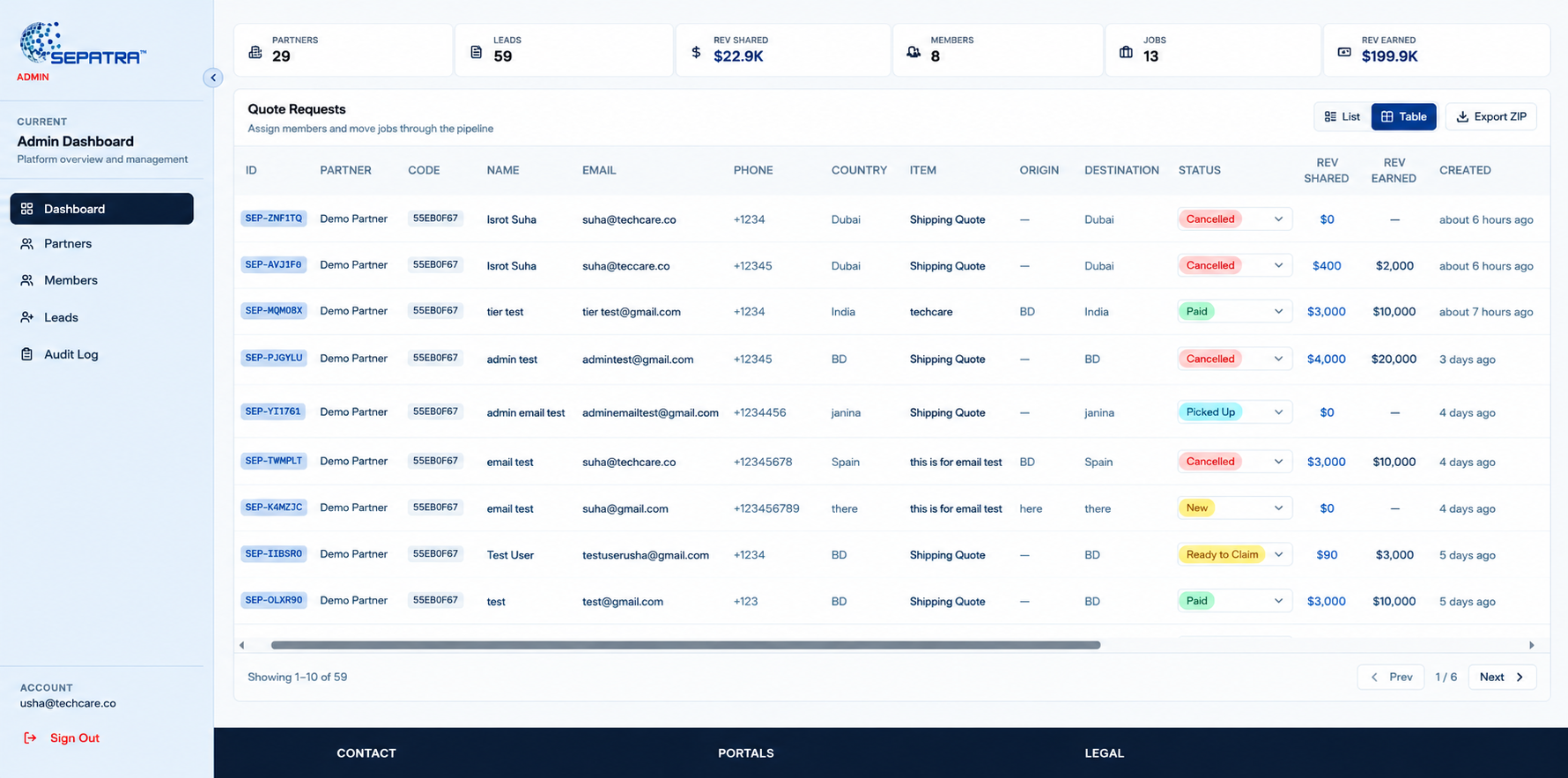
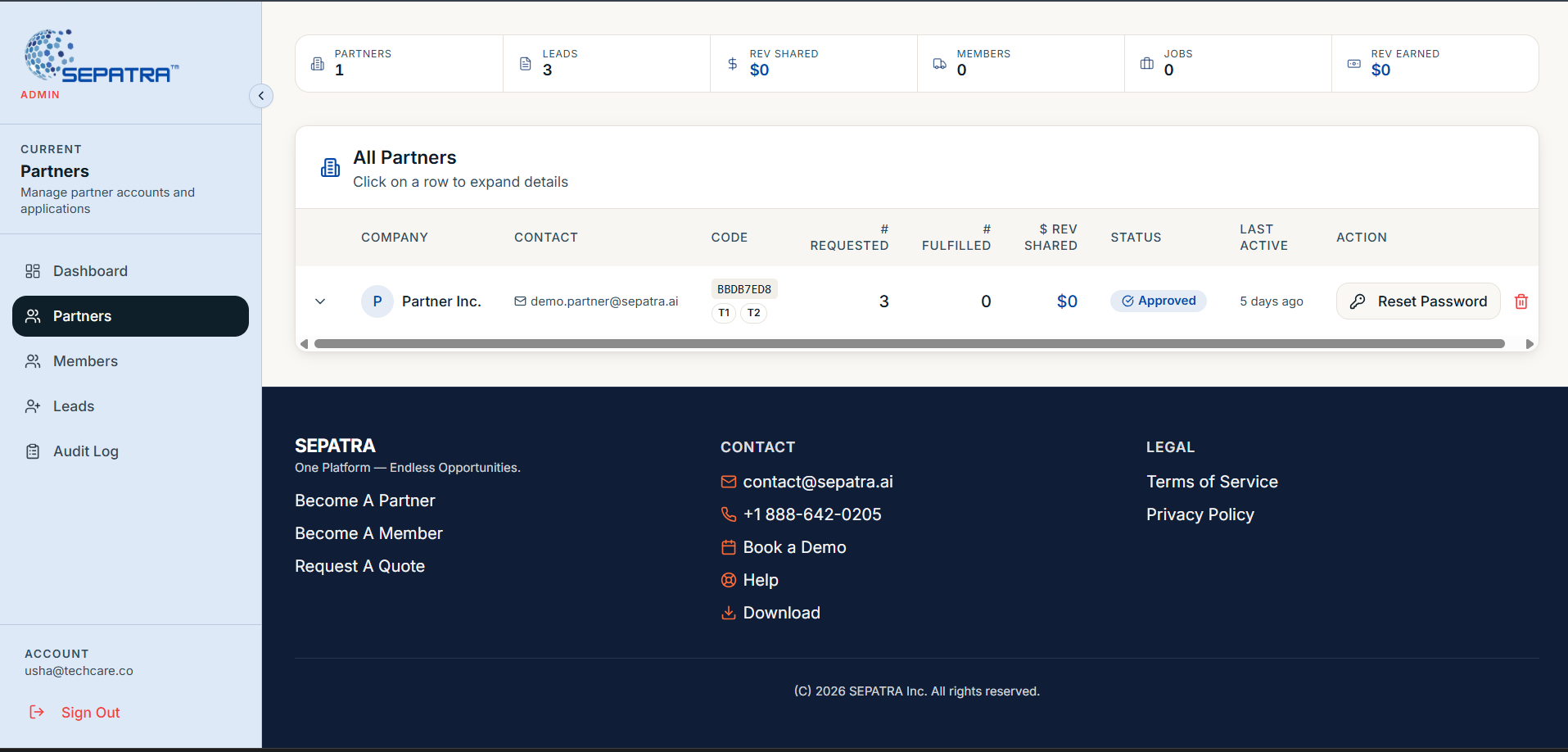
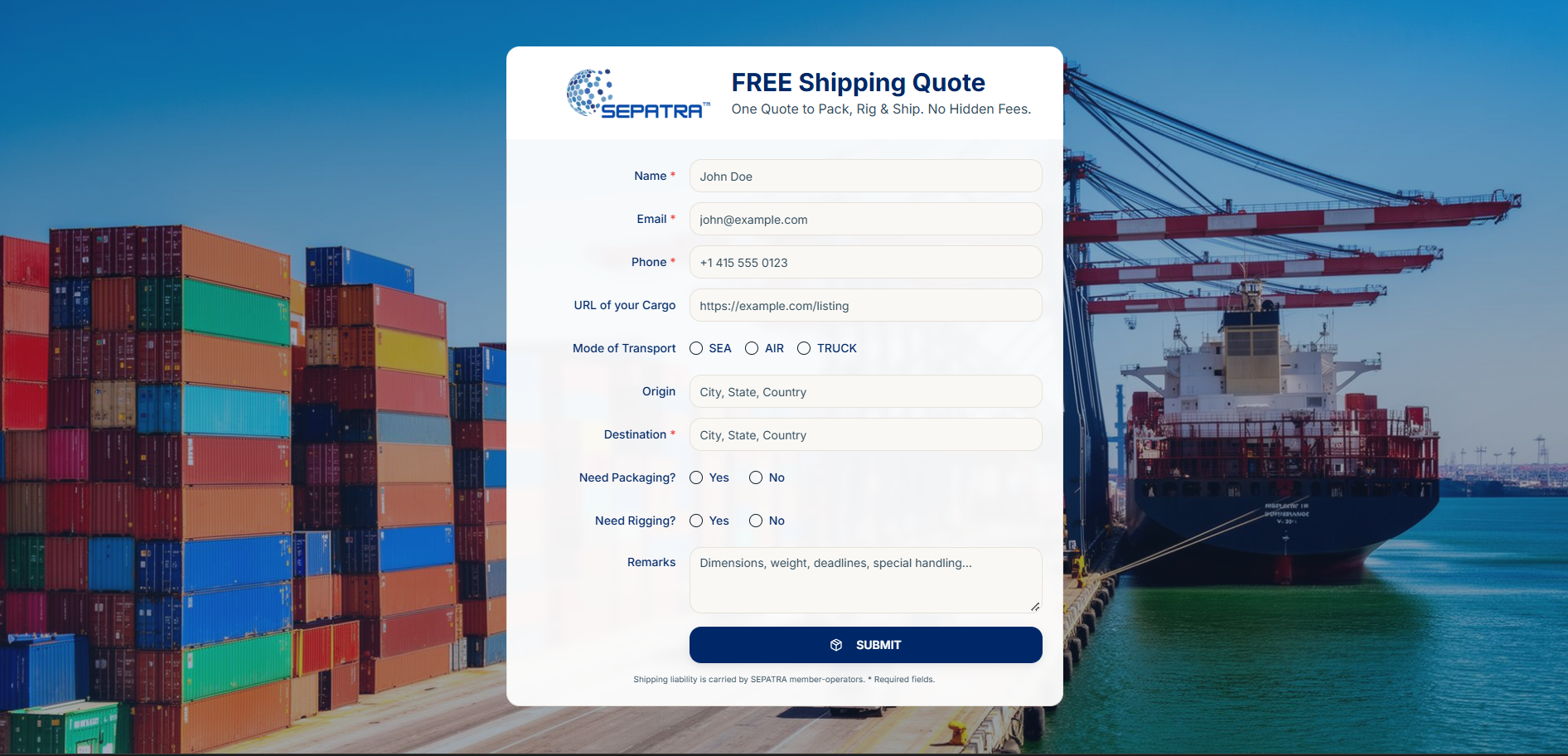
Sepatra needed a live partner and member marketplace: quote intake, partner embeds, admin ops, and CRM handoff. The product owner already had a working prototype. It lived in Lovable.
The problem
That prototype was brief.
No-code and vibe-coding tools have become the new PRD for many product owners. Instead of a long requirements document, Sepatra arrived with clickable flows, real screens, and a first cut of backend behavior. The client built that first version in Lovable and validated the product shape quickly.
Speed got them far. Production asked for more.
Once real users, partner widgets, transactional email, and admin privileges entered the picture, the gaps showed up as engineering work, not as polish:
The ask was clear: keep the product momentum, take ownership of the runtime, and make the platform safe to operate.
Technology stack
| Layer | Choices |
|---|---|
| Frontend | React 18, TypeScript, Vite, React Router, TanStack Query |
| UI | Tailwind CSS, Radix / shadcn-style components |
| Backend data | Supabase (Postgres, Auth, Storage, RLS) |
| Serverless | Supabase Edge Functions (Deno) |
| Brevo, queue-backed transactional sends | |
| CRM | Odoo integration for opportunity sync |
| Hosting / CI | AWS Amplify with branch-based pipelines (playground, main-supabase, prod) |
| Source control | GitHub (TechCare-Inc/sepatra-two) |
| Origin prototype | Lovable (retired as runtime after edge migration) |
Results
Takeaway for similar teams
If your product owner can already click through a Lovable (or similar) prototype, that artifact is often enough to start an enterprise build. The cutover still has to earn its keep:
When those pieces are in place, the client can keep innovating on a playground branch while production stays stable.