About Prohori
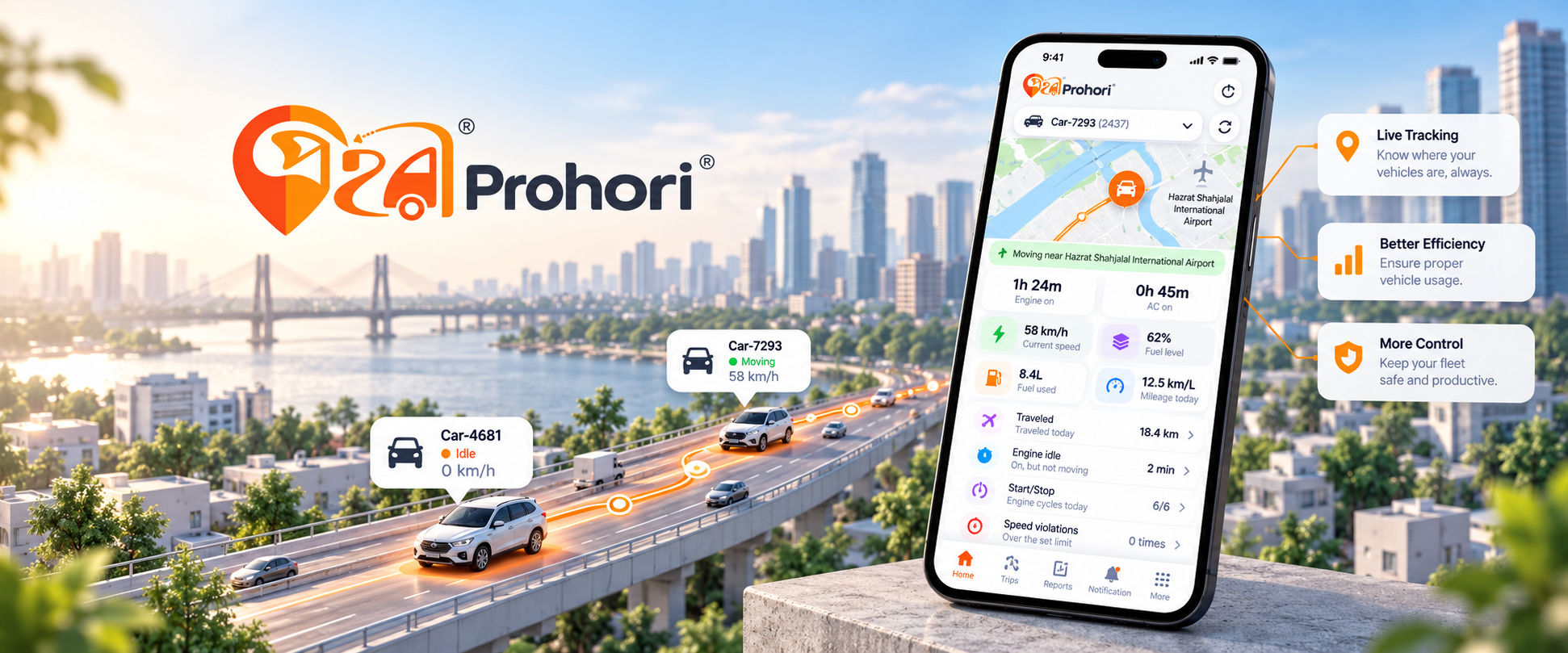
Prohori, a sister concern of Onnorokom Group, focuses on vehicle tracking solutions for fleet owners. The main idea was to help companies keep an eye on their vehicles and make sure they are being used properly with the help of technology. At the time, there was no proper mobile solution available, and managing vehicles through web systems was not practical for everyday use.
Performance Highlights

The Challenges
Solutions & Impact
TechCare's Journey with Prohori
2017 - Ideation
Prohori wanted to make vehicle tracking easier and more accessible. They wanted to create a solution that would help people keep an eye on their vehicles at all times and have better control over them. The main idea was to make vehicle tracking something that people could do every day with their phones. Prohori thought that vehicle tracking should be something that's easy to use and understand.
Experimentation (POC Phase)
The early concept started as an experiment by Pi Labs Ltd. A tracking device was built that could send vehicle data to a server using GSM networks. This proved that the idea worked and opened the path for building a full product.
Development Phase
TechCare started building the mobile application with a focus on user needs. The main goal was to create a simple and functional app that fleet owners could use daily.
Key features included:

Development followed an agile and milestone-based approach.
Key Decisions
Results & Impact
Tech Stack, How We Built It
| Component | Detail |
|---|---|
| Frontend | Android, React Native |
| Backend | Server-side data processing (handled by Prohori team) |
| Data Flow | GPS device → Server → Mobile Application |
| Network | GSM-based data transmission (EDGE and others) |
Systems Delivered
| Component | Detail |
|---|---|
| Mobile Application | A complete vehicle tracking app with real-time monitoring and control features |
| User Authentication System | Login with Google and social sign-in options |
| Tracking System | Live vehicle tracking with location updates |
| Fleet Management Dashboard | Simplified view to manage multiple vehicles |
| Geo-Fencing System | Set boundaries and control vehicle movement |
| Notification System | Real-time alerts for important events and updates |
| Performance Optimization | Server-side processing to reduce load on mobile devices |
Data and Performance Approach
Real-time tracking using continuous GPS data
Server handled all heavy calculations
Mobile app focused on displaying data smoothly
Data sync managed through periodic updates